When Can I Start Exercising After Having a Baby? A Safe Postpartum Exercise Timeline
By Tanya Sharma, Clinical Content Lead and Exercise Physiologist
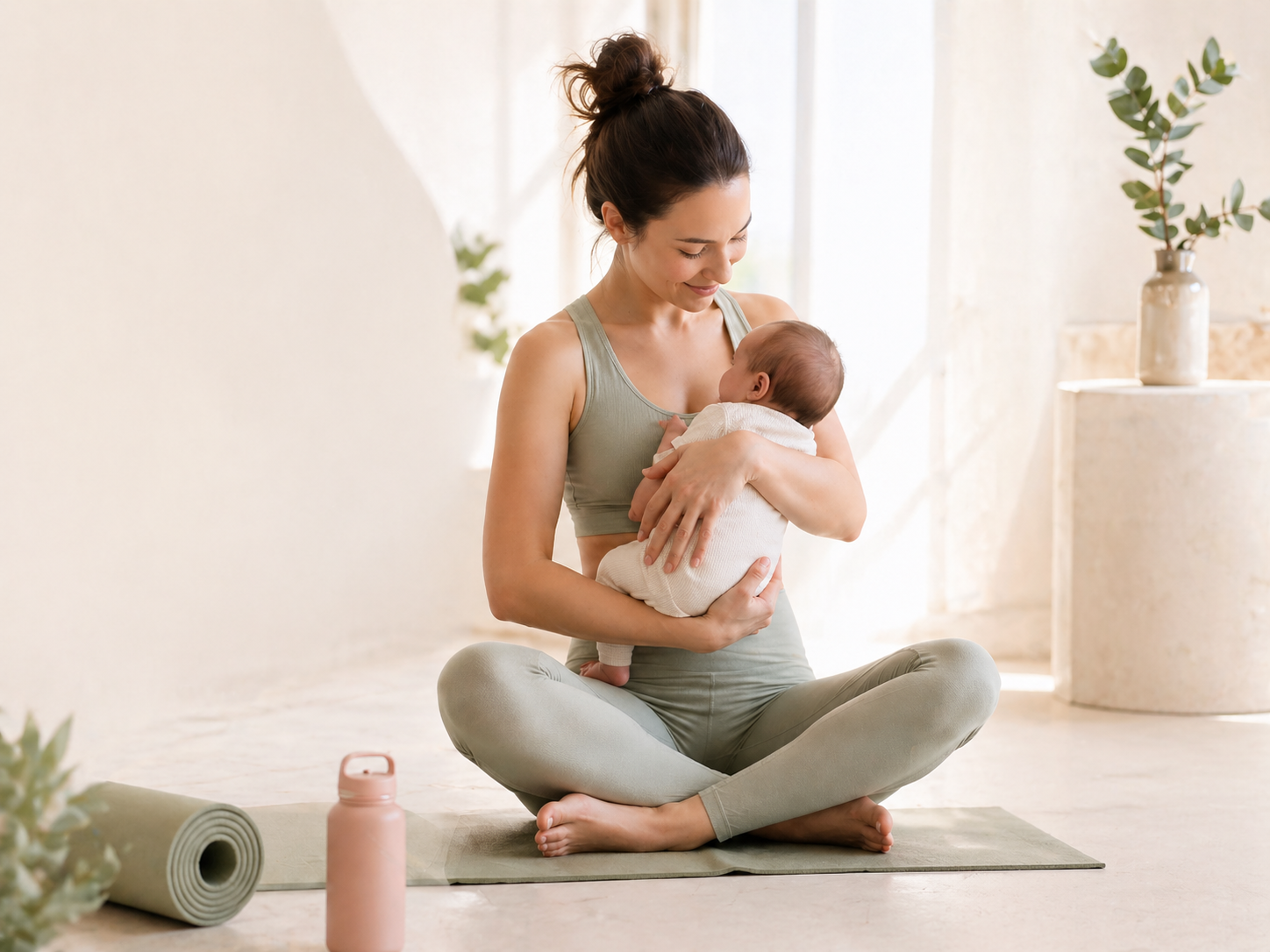
When to start exercise postpartum explained. Learn a safe postpartum exercise timeline and how to return to exercise after having a baby.
It’s very common to be confused about how to exercise after having a baby, especially after being cleared in your 6-week postpartum check-up. The doctor may have cleared you for exercise, but no one has informed you on what to do next. The answer isn't so simple, because it depends on a few factors.
Understanding when to start exercising postpartum and where to begin isn’t just about getting back to where you were before pregnancy. Your body has gone through many changes during pregnancy and birth, and recovery takes time. Returning to exercise is a gradual process, and everyone’s journey will look a little different. Where you start depends on how you’re recovering, any symptoms you may be experiencing, the type of delivery you had, and the activities you’d like to return.
With the right approach, exercise can support and boost your recovery, build strength for the physical demands of early motherhood, such as feeding, carrying, settling, lifting, and everything in between, to help you feel more confident moving into motherhood.
The 6-Week Clearance - What Does it Mean?
At the 6-week mark, your doctor will assess and give you the okay to start exercise- it’s a medical safety check.
Research and clinical guidelines suggest that while many women may be cleared for activity around this time, recovery of the core, pelvic floor, and connective tissues is still ongoing[1]. Therefore, while it is very important to resume regular exercise, the 6-week check is the starting point for rebuilding, not a signal to jump right back into high-intensity exercise.
So What’s the Real Postpartum Exercise Timeline?
Depending on your delivery process, every woman has a different postpartum exercise timeline. As a general guide, the gradual return to exercise can be categorised into phases[1].
0-6 weeks: Recovery and reconnecting with your body
Gentle walking (if comfortable)- try to gradually increase distance and speed by around 10% per week
Breathing and Pelvic Floor Awareness
Rest and healing- staying hydrated and prioritising comfort and support are important during this phase.
At this stage, it's very important to consider any equipment/resources you may need for this, and seek help if something doesn't feel right.
6-12 weeks: Rebuilding your foundations
Light resistance training and low-impact exercise
Throughout this phase, progressively increase intensity
Pelvic floor assessment is recommended before returning to high-impact exercise.
This is where many commence structured postpartum exercise, but progression still must be gradual.
12+ weeks: Returning to higher intensity activity
Progressing towards higher impact exercises and sport
New footwear may be required due to a change in foot mechanics
Starting to do even heavier strength training
Maintain regular check-ups with a pelvic health specialist
While this general guide is a great starting point, newer research suggests some women may be able to begin gentle strength training before the 6-week mark, particularly if they were already strength training or staying physically active before and during pregnancy[2]. With support from a pelvic health or women’s health physiotherapist, this timeline may be able to be brought forward based on how your body is recovering.
For women recovering from a caesarean birth, perineal trauma, or more complex deliveries, recovery timelines may look different again, and if your recovery feels slower than expected, that doesn’t mean you’re behind. Healing is not linear, and needing more time is completely normal.
Signs Your Body is Ready (or Needs More Time)
An important part of understanding your postpartum exercise timeline is knowing what your body is telling you.
Positive signs:
No pain or improving pain/discomfort
Good control of the core and pelvic floor
Feeling stable and balanced during movement
Signs that you may need to scale back or seek support:
Pelvic heaviness or pressure
Leaking (urinary or bowel)
Abdominal doming
If you notice any of these, it may be helpful to check in with a pelvic health professional for reassurance and guidance.
Why Guidance Matters
Every postpartum journey is different. Factors like delivery type, pelvic floor health, and previous training all influence your timeline.
Working with a qualified health professional, such as an exercise physiologist or a pelvic health physiotherapist, can help ensure:
Safe progression
Appropriate exercise selection
Confidence in your return to regular exercise
Need a hand with your return to exercise?
Every postpartum recovery looks different, and figuring out the next step on your own can feel like a lot.
At Strength By Women, our Postpartum Program meets you where your body is right now, with a focus on rebuilding safely and restoring the strength you need for early motherhood.
If you're not sure where to begin, an Initial Consultation is a low-pressure place to start. We'll listen first, and only suggest a way forward if it feels right for you.
References
1. Inge P, Orchard JJ, Purdue R, Orchard JW. Exercise after pregnancy. Australian Journal of General Practice. 2022 Mar 1;51(3):117–21.
2. Selman R, Early K, Battles B, Seidenburg M, Wendel E, Westerlund S. Maximizing recovery in the postpartum period: A timeline for rehabilitation from pregnancy through return to sport. International Journal of Sports Physical Therapy. 2022 Oct 1;17(6):1170–83.