No, Lifting Heavy Won’t Make You Bulky (Here’s What it Actually Does)
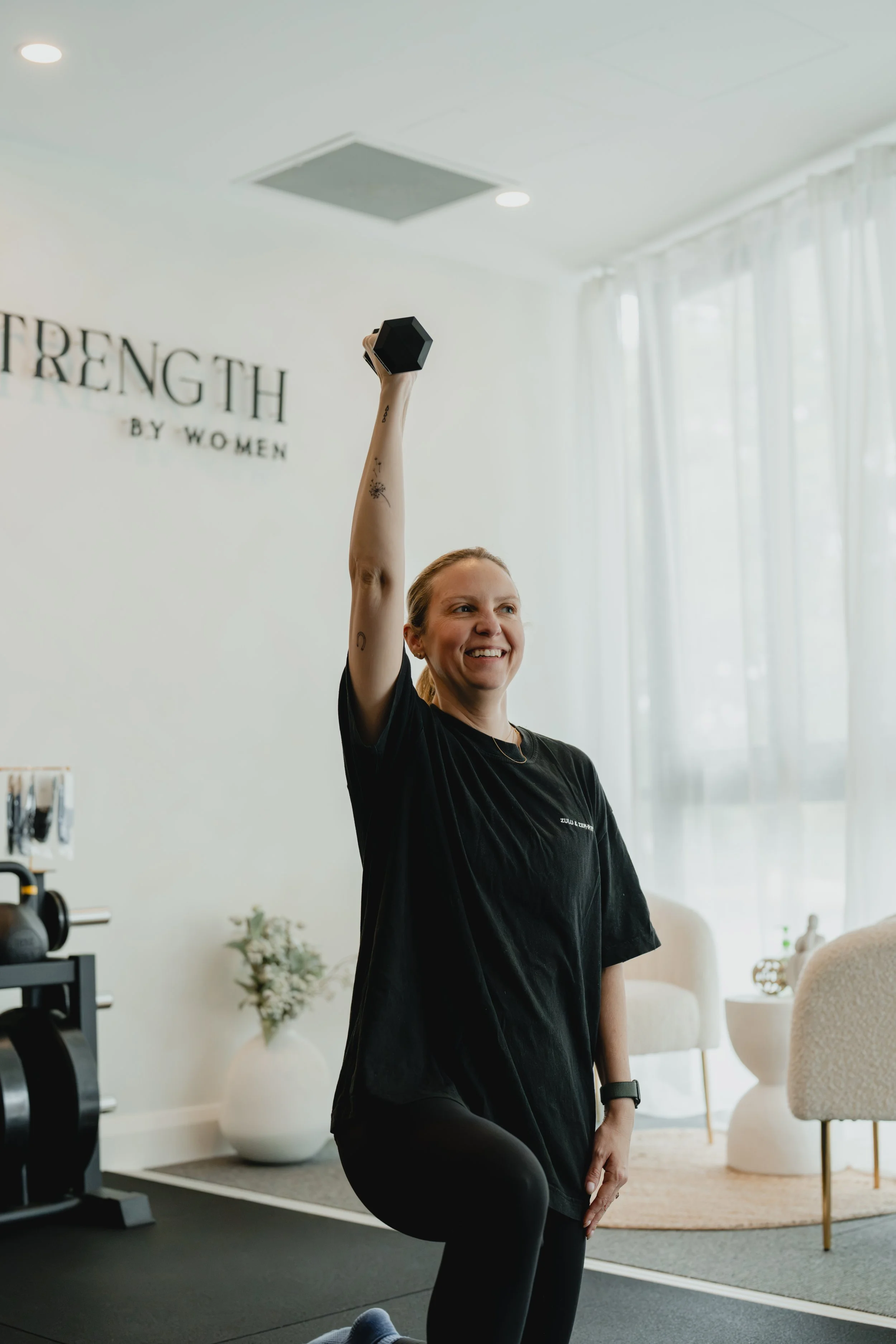
Will lifting weights make you bulky? Learn what lifting heavy can actually do for muscle, strength, bone health, and healthy ageing.
Will Lifting weights make you Bulky?
It's one of the most common questions women ask when they're considering strength training, and it's understandable. For many years, the consensus around women's fitness was to "tone" rather than build muscle, while bodybuilding and highly muscular physiques became the representation of what happens when someone lifts weights.
To clear up this myth, yes, lifting weights can build muscle. But becoming noticeably more muscular doesn't happen overnight. How much muscle you build depends on how you train, your nutrition, recovery, genetics and, importantly, your goals.
Rather than being something to fear, building and maintaining muscle is one of the reasons we encourage women to strength train in the first place.
What actually happens when you start strength training?
When you first begin resistance training, your body has to learn how to perform the movements efficiently. Your nervous system becomes better at recruiting and coordinating your muscles [1], which is one of the reasons you can become noticeably stronger before seeing large changes in muscle size.
These are called neural adaptations, where your brain and nervous system become better at telling your muscles when and how to produce force. Over time, your muscles also adapt to the repeated training stimulus. This can include increases in muscle size, known as hypertrophy [2].
These adaptations aren't completely separate or divided into distinct phases; they overlap, with the contribution of each changing as you continue training [3]. Early improvements in strength are often strongly influenced by neural and skill-based adaptations, while continued training can lead to more noticeable changes in muscle size.
This is important because getting stronger doesn't automatically mean getting bulky.
Your body can become significantly stronger as you learn to use your existing muscle more effectively, while continued training helps you maintain and build the muscle that supports that strength.
Why does muscle matter?
Muscle isn't just about appearance. We need it for everyday movement, strength, and endurance, but it also plays an important role in metabolic health [4]. Muscle is one of the body's major tissues involved in storing and using glucose, meaning it helps regulate blood sugar levels and how our body responds to insulin. Having more active muscle tissue also gives the body a greater capacity to take up and use glucose, particularly during and after exercise.
Muscle also contributes to how much energy your body uses each day. Maintaining lean muscle mass supports your resting energy needs and, alongside regular movement and appropriate nutrition, can help support a healthier body composition. This is one reason why preserving muscle as we age is so important. It isn't just about how much we weigh, but about maintaining a healthy balance of muscle and fat while keeping our bodies strong and capable.
Ageing is associated with gradual declines in muscle mass and strength [5]. Resistance training can help counter these changes, with research showing that older adults can increase muscle mass and strength through resistance training well into later life [6].
This matters because maintaining muscle helps us maintain function and independence.It's what allows you to carry your groceries, get up from the floor, climb stairs, lift your suitcase or keep participating in the activities you enjoy.
And importantly, muscle provides the foundation for developing more than just strength.
How Heavy Should You Lift?
“Heavy” is relative, it doesn’t mean lifting the biggest weight you can possibly manage; it means providing your muscles with an appropriate challenge for your current ability and goals. As you become stronger, gradually increasing the load or challenge of an exercise gives your body a reason to continue adapting [7]. This is known as progressive overload.
Building a foundation of strength and muscle can also help you develop power, which is your ability to produce force quickly. This is important for everyday movements [8], such as getting up from a chair, reacting when you lose your balance, stepping over an unexpected obstacle, or moving quickly when you need to. While strength provides the foundation for producing force, power allows you to use that force quickly and effectively. Both become increasingly important as we age.
The right weight will look different for everyone and depends on your current strength, experience, health, goals, and the exercise you’re performing. You also don’t need to train specifically for muscle growth to benefit from resistance training. Your goals might be improving strength, supporting healthy ageing, maintaining muscle or simply feeling more confident in your body.
There’s no “one right way” to lift. The goal is to find an appropriate level of challenge for you, and gradually build from there.
If you've been avoiding strength training because you're worried about becoming "bulky", it might be time to rethink what building muscle really means.
Strength training isn't about building as much muscle as possible. It's about developing the muscle, strength and power that help you feel capable, confident and independent in your body.
At Strength By Women, our Exercise Physiologists work with many women to create personalised strength programs based on your body, your health and your goals.
Curious about what strength training could look like for you? Start with a conversation, not a commitment.
References
1.Siddique U, Rahman S, Frazer AK, Pearce AJ, Howatson G, Kidgell DJ. Determining the Sites of Neural Adaptations to Resistance Training: A Systematic Review and Meta-analysis. Sports Medicine. 2020;50.doi:10.1007/s40279-020-01258-z
2.Hagstrom A D, Marshall PW, Halaki M, Hackett DA. The Effect of Resistance Training in Women on Dynamic Strength and Muscular Hypertrophy: a Systematic Review with Meta-analysis. Sports medicine (Auckland, NZ). 2019;50:10.1007/s40279-019-01247-x. doi:10.1007/s40279-019-01247-x
3.Pearcey GEP, Alizedah S, Power KE, Button DC. Chronic resistance training: is it time to rethink the time course of neural contributions to strength gain? European Journal of Applied Physiology. 2021;121(9):2413-2422. doi:10.1007/s00421-021-04730-4
4. McPherron AC, Guo T, Bond ND, Gavrilova O. Increasing muscle mass to improve metabolism. Adipocyte. 2013;2(2):92-98. doi:10.4161/adip.22500
5. Md P, A S, Pm G. Influence of Resistance Exercise on Lean Body Mass in Aging Adults: A Meta-Analysis.Medicine and science in sports and exercise. 1 February 2011. Accessed 23 August 2026 https://pubmed.ncbi.nlm.nih.gov/20543750/
6. Schoenfeld BJ, Ogborn D, Krieger JW. Dose-response relationship between weekly resistance training volume and increases in muscle mass: A systematic review and meta-analysis. Journal of sports sciences.2017;35(11):1073-1082. Accessed 23 August 2026. https://www.ncbi.nlm.nih.gov/pubmed/27433992
7. Liu C, Latham NK. Progressive Resistance Strength Training for Improving Physical Function in Older Adults. Cochrane Database of Systematic Reviews. 2009;3(3). doi:10.1002/14651858.cd002759.pub2
8. Sayers SP, Gibson K. High-Speed Power Training in Older Adults. Journal of Strength and Conditioning Research. 2014;28(3):616-621. doi:10.1519/jsc.0b013e3182a361b8